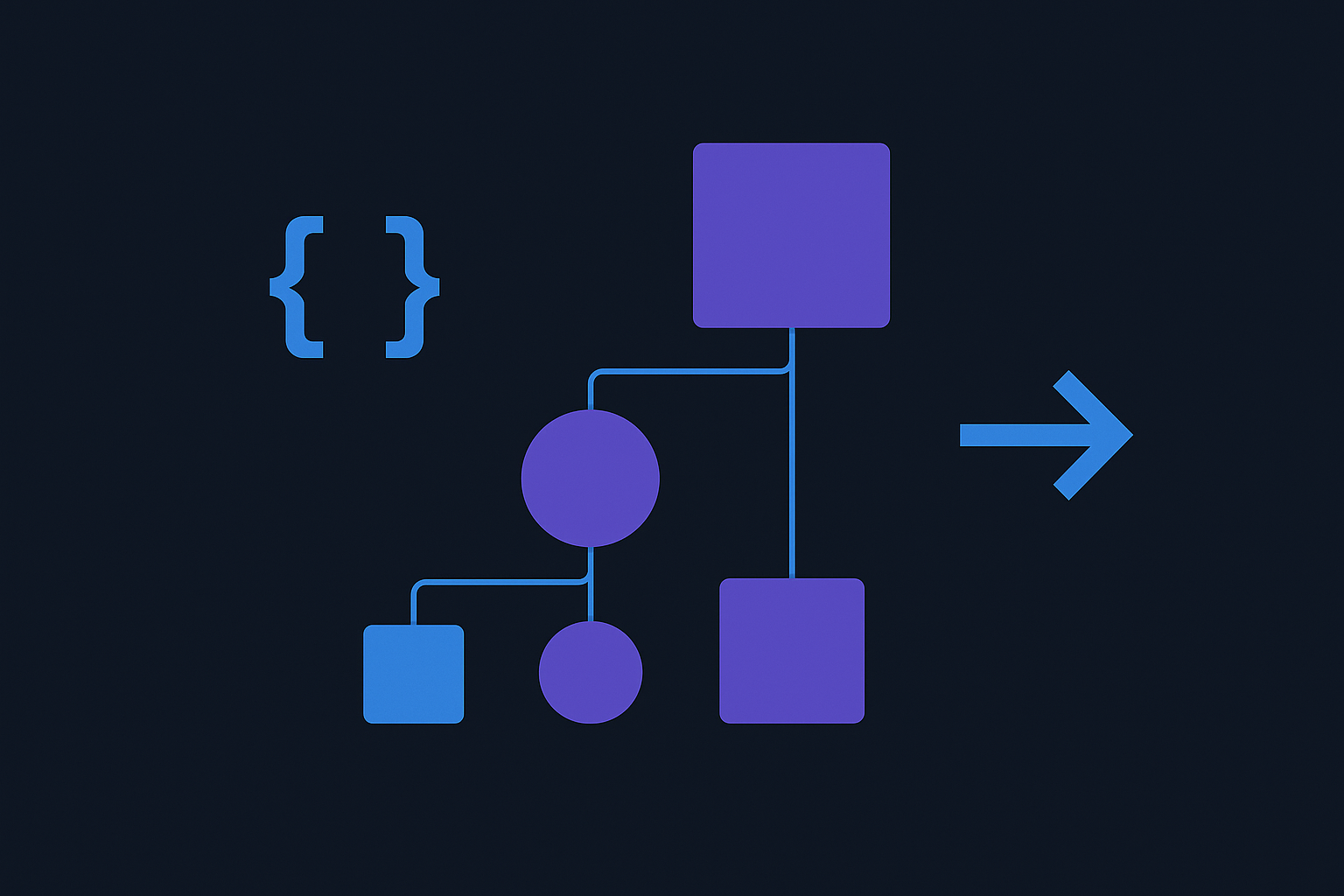
Structure JSON-LD as a connected entity graph: give the company and product stable @id values, link the product to its actual provider, and add sameAs only where an external page verifies the same entity. This gives parsers explicit relationships to inspect. Google says structured data can help its systems understand a page, while its generative AI features require no special Schema.org markup.
Model the entity before choosing properties
Schema.org is a vocabulary for describing entities and their relationships. JSON-LD is a format for expressing those statements in a document. A JSON-LD graph can say that GEOall is an organization, that a named software application has GEOall as its provider, and that GEOall has a parent company.
That mapping starts with ownership records, product pages, and legal disclosures. A plugin can emit a valid Organization node while assigning the wrong company name or attaching a product to the wrong publisher. Syntax validation will accept those claims because it cannot establish who owns the business.
Use one stable @id for each entity across the site. A homepage graph might define https://geoall.com/#organization; a product page can refer to that ID through provider without redefining the company under another identifier. Keep the canonical URL distinct from @id: the URL locates a page, while the ID identifies the thing described.
Treat sameAs as an identity assertion
sameAs is a Schema.org property for a reference URL that unambiguously identifies the item. It carries a stronger claim than about or mentions. A software company writing about Wikidata can mention Wikidata without claiming that the company is Wikidata.
That makes sameAs the most sensitive property in an entity audit. A verified Wikidata item for the exact company can help a parser reconcile references across sites; a Wikidata item for the company's industry would create a false identity assertion. Check the target page's name, description, official website, and ownership before adding its URL.
Wikipedia and Wikidata coverage is uneven for new SaaS products. Don't invent an item or borrow a similarly named company's page to fill a field. Leave the brand's sameAs absent until a genuine identity reference exists, then keep the linked record current as the company changes names or domains.
Connect the company and product
The following mock example describes GEOall as an organization under DSS Media, LLC, based in Colorado. It connects a SoftwareApplication node to GEOall through provider. The example deliberately leaves brand-level sameAs out because it supplies no verified external identity record for either company.
{
  "@context": "https://schema.org",
  "@graph": [
    {
      "@type": "Organization",
      "@id": "https://geoall.com/#organization",
      "name": "GEOall",
      "url": "https://geoall.com",
      "parentOrganization": {
        "@id": "https://geoall.com/#parent-organization"
      }
    },
    {
      "@type": "Organization",
      "@id": "https://geoall.com/#parent-organization",
      "name": "DSS Media, LLC",
      "address": {
        "@type": "PostalAddress",
        "addressRegion": "CO",
        "addressCountry": "US"
      }
    },
    {
      "@type": "SoftwareApplication",
      "@id": "https://geoall.com/#software",
      "name": "GEOall",
      "url": "https://geoall.com",
      "applicationCategory": "BusinessApplication",
      "provider": {
        "@id": "https://geoall.com/#organization"
      }
    }
  ]
}
The two GEOall nodes describe different things despite sharing a name. The Organization represents the business identity; the SoftwareApplication represents the product. Its provider reference points to the organization node, while parentOrganization records the stated corporate relationship.
Publish this graph only where the visible page supports its claims. Confirm the legal name and Colorado location against company records before using the example on a live site. Add application details such as supported operating systems or pricing only when the product page supplies accurate values.
Separate identity from subject matter
about identifies a page's primary subject. mentions identifies an entity discussed within it. A technical article about JSON-LD can use a Thing node with sameAs pointing to the exact JSON-LD Wikipedia page; that identity belongs to the topic node, not to the article's publisher.
Wikidata URLs require the same care. A QID must resolve to the exact concept, person, organization, or product named by its node. Record the checked URL and review date in the content workflow so an editor can trace why the mapping was approved.
Google's Rich Results Test checks eligibility for supported Search features. The Schema.org Validator checks vocabulary use across a wider range of types. Run both where relevant, then inspect the rendered page: a valid graph embedded only in an unpublished template or blocked response gives a crawler nothing to read.
Audit relationships at scale
Advanced GEO audits need assertions that a parser alone cannot make. An automated check can detect duplicate @id values assigned to different entities, broken sameAs targets, missing provider references, and organization names that conflict across pages. A reviewer must still decide whether an external identity page belongs to the claimed entity.
Compare structured data with visible text and the canonical page on every release. When a product changes ownership, update the corporate relationship and every graph that refers to it. Log the before and after graph so the team can separate a markup correction from a later change in search or AI answer visibility.
No public documentation from OpenAI or Perplexity establishes deep JSON-LD mapping as a requirement for citation. Google also states that special structured data isn't required for its generative AI features. Measure effects with controlled prompts and observed citations, while using graph validation to prevent the concrete error an audit can prove: a machine-readable claim that misidentifies the company, product, or topic.
Discussion
No comments yet — start the discussion.